Reduced mobility shower screens to improve accessibility
The shower area is one of the spaces in the bathroom where mobility limitations are most noticeable. That is why choosing a shower screen for reduced mobility is not simply about installing an enclosure, but about creating a more comfortable, safe and functional environment for daily use.
At Profiltek we develop tailored solutions for both individuals and professionals looking to improve bathroom accessibility. Our shower screens for people with reduced mobility are designed to facilitate access, improve autonomy and offer reliable performance for years, reducing obstacles and promoting a more comfortable user experience for users, family members and carers.
The Assisted shower enclosures make everyday life easier for people with reduced mobility and for those who assist them. A design created to provide space, comfort and a more accessible shower experience.
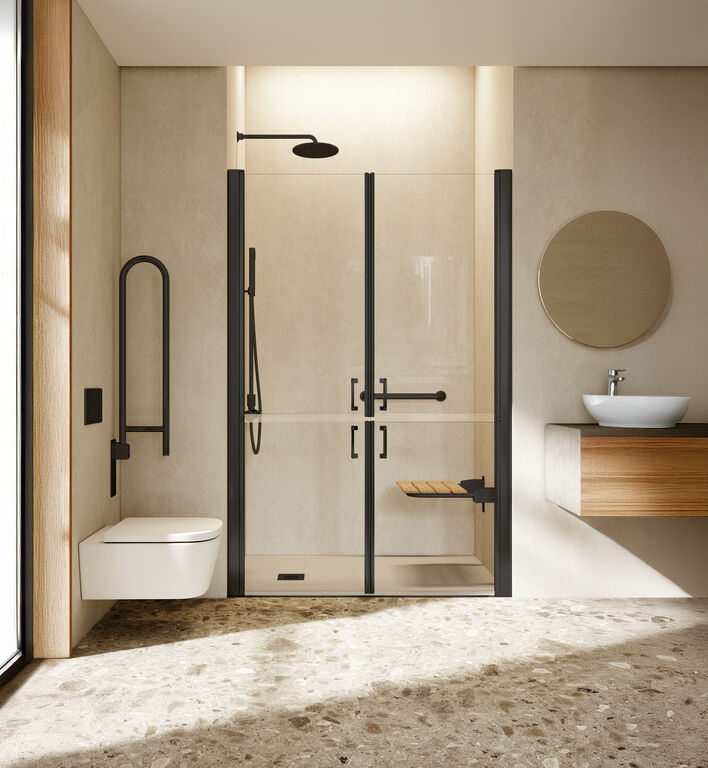
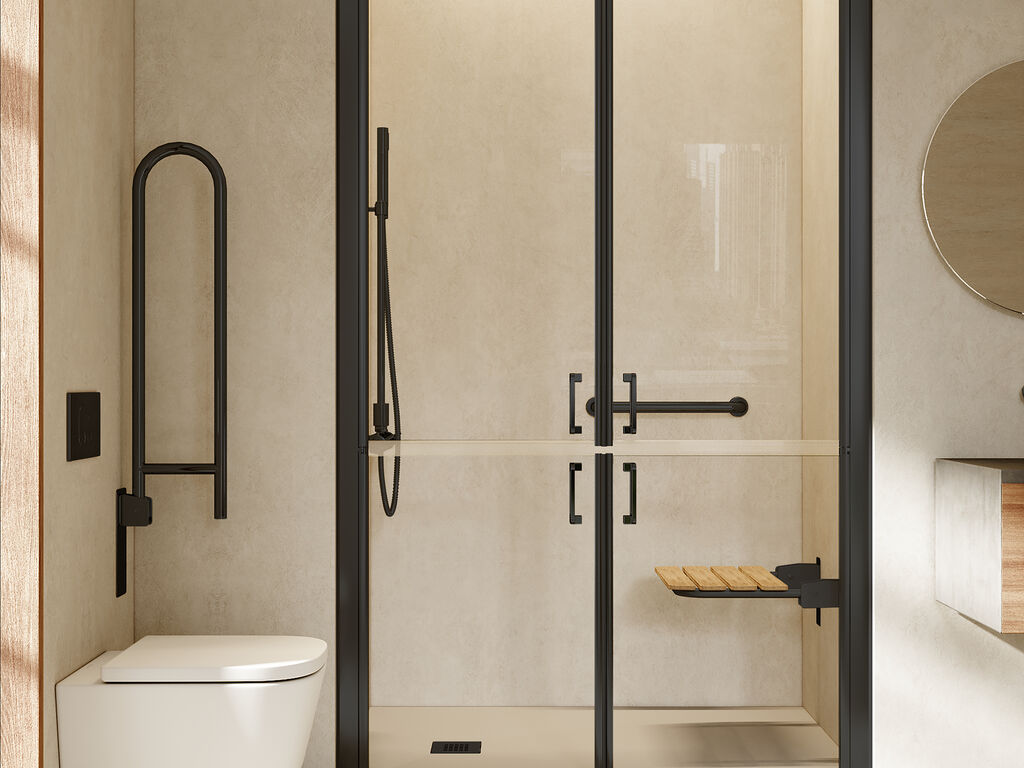
Shower screens for people with reduced mobility
Accessibility needs can vary according to age, degree of mobility or the characteristics of the home. However, there is a common objective in all cases: to make access to the shower simpler, safer and more comfortable.
A correctly designed solution provides real advantages in daily use:
- Facilitates entering and leaving the shower.
- Reduces obstacles and unnecessary movements.
- Improves safety during daily hygiene.
- Promotes independent use where possible.
- Facilitates assistance from family members or carers.
- Adapts to different bathroom configurations and shower trays.
When accessibility is part of the project from the beginning, the result is a more comfortable shower for all users.
Showers for people with reduced mobility designed for daily use
Accessibility does not depend solely on the screen. An adapted shower must function as a whole where each element contributes to improving comfort and safety.
Aspects such as the type of opening, the width of access, the absence of barriers or the ease of cleaning directly influence the user experience. What matters is not only being able to access the shower, but doing so in a comfortable, safe way without creating additional difficulties over time.
That is why screens for people with reduced mobility must be designed with real use situations in mind, considering both the user's autonomy and the possible need for assistance.
Shower screens for elderly people and dependent persons
Many accessibility-oriented renovations aim to improve the quality of life of elderly people or dependent users. In these cases, a screen must offer more than splash protection.
Shower screens for elderly people help create more comfortable and safe spaces, promoting more natural movements and reducing uncomfortable situations during access to the shower. In the same way, shower screens for dependent persons allow the space to be adapted to specific needs without sacrificing a durable, well-integrated solution in the bathroom.
The result is a more practical shower for the user and easier to manage for those who provide support.
Assistive shower screens for people who need daily support
In many homes and care environments, the shower is not used by one person alone. Family members, carers or professionals also participate who assist during daily hygiene.
For this reason, assistive shower screens must facilitate access, allow more comfortable movements and provide an adequate working space when assistance is required. Aspects such as a wide opening, correct distribution of space or the elimination of obstacles can make an important difference in everyday use.
Designing with only the end user in mind is not always sufficient. In many cases, functionality also depends on how the installation responds when a second person is involved.
Safety and accessibility in showers for disabled people and the elderly
When planning an adapted shower, there are several factors that have a direct impact on comfort and safety of use.
|
Element |
Why it is important |
|---|---|
|
Wide access |
Facilitates entering and leaving the shower |
|
Comfortable opening |
Reduces effort and unnecessary movements |
|
Floor-level shower tray |
Minimises architectural barriers |
|
Space for assistance |
Facilitates help from family members or carers |
|
Resistant materials |
Maintain safety over time |
|
Easy-to-clean solutions |
Reduce daily maintenance |
|
Robust systems |
Improve reliability in intensive use |
The combination of these elements is what truly determines whether a shower is comfortable and safe in daily use.
Shower screens for people with reduced mobility manufactured with precision
Shower screens for reduced mobility are usually part of projects where precision is especially important. Insufficient access, an uncomfortable opening or a poorly adjusted installation can directly affect the shower's functionality.
That is why Profiltek directly controls all phases of the production process. This makes it possible to develop more precise solutions, with better adjustments and a greater capacity for adapting to the real needs of each project. This personalisation capacity is also particularly useful in specific configurations, such as shower screens up to the ceiling, where correct adaptation to the characteristics of the space is fundamental to guaranteeing both the aesthetics and functionality of the whole.
In-house manufacturing also makes it easier to maintain homogeneous quality standards, something particularly valued by installers, distributors, promoters and professionals specialised in accessibility.
Shower screen for reduced mobility designed to last for years
An adapted screen must continue to function correctly after thousands of openings, temperature changes, constant humidity and years of continuous use.
For this reason, the development of these solutions prioritises aspects such as structural stability, wear resistance, ease of maintenance and reliability of the opening systems. The objective is to offer a solution prepared to respond correctly throughout its useful life, reducing incidents and maintaining comfort of use over time.
Why choose a Profiltek shower screen for reduced mobility
Choosing a Profiltek shower screen for reduced mobility means opting for a solution designed to improve accessibility without compromising reliability or durability. Thanks to in-house manufacturing and integral process control, each project can be adapted with precision to the real needs of use, offering more comfortable, safer configurations prepared to respond correctly for years.
More than a screen, it is a solution oriented towards facilitating daily life, reducing access difficulties and providing peace of mind to users, family members, carers and professionals.
Frequently asked questions about shower screens for reduced mobility
What is a shower screen for reduced mobility?
A shower screen for reduced mobility is a solution designed to facilitate access and improve the safety of elderly people, dependent persons or those with limited mobility. Its objective is to reduce barriers and make daily use of the shower more comfortable.
What is the best screen for a person with reduced mobility?
The best option is one that allows comfortable access, minimises obstacles and adapts to the user's real needs. The width of opening, ease of use and compatibility with accessible shower trays are usually determining factors.
Do shower screens for elderly people improve safety?
Yes. Shower screens for elderly people facilitate access, reduce uncomfortable movements and help create a safer and more functional shower area for daily use.
What is the difference between a conventional screen and an assistive screen?
An assistive shower screen is designed taking accessibility criteria, ease of access and support during hygiene into account. This allows it to better respond to the needs of dependent persons or users with reduced mobility.
Can these screens be installed on extra-flat shower trays?
Yes. In fact, many screens for people with reduced mobility are combined with extra-flat or floor-level trays to eliminate barriers and facilitate entering and leaving the shower.
Are they suitable for care homes, hospitals or care centres?
Yes. Assistive shower screens are common in care homes, socio-health centres, hospitals, adapted housing and other projects where accessibility and safety are among the main requirements.